Let us never forget this auspicious anniversary of the day our Very Stable Genius with Great and Unmatched Wisdom blithely retweeted at 4:31 am a "rock on" tweet about his "integrity sir" from a supporter named catpenis.
Showing posts with label anniversaries. Show all posts
Friday, October 25, 2019
Monday, September 16, 2019
It's "whom"
There is a moment near the end of The Goat, or Who is Sylvia?--Edward Albee's 2002 play exploring the outer limits of love, fidelity, morality and tolerance--where the emotional crisis at the center of the narrative boils over into such catastrophic levels of heartache and rage and such Greek-tragedy levels of destruction and retribution that the first time I saw it--and the second time and the third time and the fourth time--the audience collectively gasped to the point of almost screaming and then sat rigidly and almost palpably silent until well after the final stage light had extinguished and the last emotionally drained actor had silently moved into position for the company bow.
It's one of my two favorite--if there even exists a favorite-not favorite continuum of cataclysmic emotional destruction--moments in modern theater ... the other being the last three seconds of David Mamet's Oleanna before the stage becomes abruptly, dreadfully dark.
Though he's largely a genre unto himself, it's difficult to pigeonhole Edward Albee as a playwright. He wrote or adapted about 30 works that embodied movements like Theatre of the Absurd and brought popular works of fiction like The Ballad of the Sad Café and Breakfast at Tiffany's to the stage and screen.
My favorite Albee works--Who's Afraid of Virginia Woolf? (embodied in this photo by the incomparable Richard Burton and Elizabeth Taylor playing the American-experiment patriarch and matriarch George and Martha [whom the script deliciously describes as "large, boisterous woman, 52, looking somewhat younger"]), The Play About the Baby and The Goat, or Who is Sylvia?--all share the format of four characters on stage and one character who may or may not exist offstage. It's an intriguing conceit, and one that keeps bringing me back to these three plays for my own contemplation. In an odd double standard, though, I can't stand reading them; the characters for me seem to be clumsy and dry with no meaningful depth on the page but they grant a glorious latitude for actors to make fascinating choices as they flesh them out.
Today is the third anniversary of Edward Albee's death. I'm not one to be sad when famous people I've never met pass away--and having seen only six of his works (that I can remember) I'm certainly no slavish Albee devotee--but I'm profoundly thankful for the emotional roller coasters he's put me on over the years ... and for the body of work he's left that I can continue to explore in my own way in my own time. I have a couple favorite quotes I'd love to mention here in closing, but they're all potential spoilers. So I'll just lift a glass of bergen to his memory.
It's one of my two favorite--if there even exists a favorite-not favorite continuum of cataclysmic emotional destruction--moments in modern theater ... the other being the last three seconds of David Mamet's Oleanna before the stage becomes abruptly, dreadfully dark.
Though he's largely a genre unto himself, it's difficult to pigeonhole Edward Albee as a playwright. He wrote or adapted about 30 works that embodied movements like Theatre of the Absurd and brought popular works of fiction like The Ballad of the Sad Café and Breakfast at Tiffany's to the stage and screen.
My favorite Albee works--Who's Afraid of Virginia Woolf? (embodied in this photo by the incomparable Richard Burton and Elizabeth Taylor playing the American-experiment patriarch and matriarch George and Martha [whom the script deliciously describes as "large, boisterous woman, 52, looking somewhat younger"]), The Play About the Baby and The Goat, or Who is Sylvia?--all share the format of four characters on stage and one character who may or may not exist offstage. It's an intriguing conceit, and one that keeps bringing me back to these three plays for my own contemplation. In an odd double standard, though, I can't stand reading them; the characters for me seem to be clumsy and dry with no meaningful depth on the page but they grant a glorious latitude for actors to make fascinating choices as they flesh them out.
Today is the third anniversary of Edward Albee's death. I'm not one to be sad when famous people I've never met pass away--and having seen only six of his works (that I can remember) I'm certainly no slavish Albee devotee--but I'm profoundly thankful for the emotional roller coasters he's put me on over the years ... and for the body of work he's left that I can continue to explore in my own way in my own time. I have a couple favorite quotes I'd love to mention here in closing, but they're all potential spoilers. So I'll just lift a glass of bergen to his memory.
Labels:
Albee,
anniversaries,
eulogies,
movies,
plays,
theater,
things in italics
Saturday, July 20, 2019
Friday, June 28, 2019
#Pride101: The 50th Anniversary of Stonewall
Fifty years ago today, the New York City police raided the Stonewall Inn--a gay bar in Greenwich Village that catered to drag queens--in an ongoing campaign of harassment and intimidation specifically targeted at people wearing clothing that didn’t conform to the conventions of their “assigned gender.” These arrests usually led to people’s names and photographs being published in the newspaper … which carried the high risk of the them losing their jobs and even their families.
Usually the people submissively complied as they were being arrested. But this time they fought back. When an officer clubbed a black lesbian named Stormé DeLarverie over the head for complaining that her handcuffs were too tight, the crowd that had gathered outside the club had had enough. Marsha P. Johnson, a black drag queen, and Sylvia Rivera, a Latinx queen, were two of the first to actively resist the police that night, and their fellow queens joined them in throwing bricks, bottles and shot glasses at officers and effectively shutting down the raid. I mention these people’s ethnicities and orientations here to give credit to the non-white, non-cis-presenting people for showing the courage and gumption to initiate the fight back and start what ended up being six days of riots in the neighborhood surrounding the Stonewall Inn that finally ignited a national fight for the rights and equalities that everyone under the LGBTQ+ rainbow enjoys today.
Stonewall wasn’t the first riot in defiance of police raids; in 1959 angry gays fought police after a raid of Cooper’s Do-Nuts--a gay-friendly diner--in Los Angeles, and in 1966 a trans woman threw a cup of hot coffee in a police officer’s face in a raid at Compton’s Cafeteria in San Francisco, sparking a riot that inspired the city to acknowledge the trans community and develop a network of trans-specific social, mental-health and medical services. But Stonewall was the turning point. The police raid quickly drew a large mob whose collective lifetimes of oppression and discrimination boiled over into a violent revolt that trapped police in the bar until the NYC Tactical Patrol Force was dispatched to rescue them. Riots erupted the next night and through the week in the Christopher Street and other nearby gay neighborhoods, including one mob that threatened to burn down the offices of The Village Voice for describing the riots as "forces of faggotry" and "Sunday fag follies." The next year, an orginization called Chicago Gay Liberation organized a parade on the anniversary of the Stonewall riot, and the city has staged a parade on the last Saturday in June ever since.
Now every major metropolis and many smaller cities have pride parades and events, many of which spill beyond the last week of June to pop up in celebrations all year. But June is officially Pride month in the hearts and minds of gay people--and an exploding population of straight people and businesses large and small--and we owe it all to the brave gay people who had had enough and fought back at great risk to themselves and even to our community fifty years ago today.
THIS IS WHY WE CELEBRATE PRIDE.
Usually the people submissively complied as they were being arrested. But this time they fought back. When an officer clubbed a black lesbian named Stormé DeLarverie over the head for complaining that her handcuffs were too tight, the crowd that had gathered outside the club had had enough. Marsha P. Johnson, a black drag queen, and Sylvia Rivera, a Latinx queen, were two of the first to actively resist the police that night, and their fellow queens joined them in throwing bricks, bottles and shot glasses at officers and effectively shutting down the raid. I mention these people’s ethnicities and orientations here to give credit to the non-white, non-cis-presenting people for showing the courage and gumption to initiate the fight back and start what ended up being six days of riots in the neighborhood surrounding the Stonewall Inn that finally ignited a national fight for the rights and equalities that everyone under the LGBTQ+ rainbow enjoys today.
Stonewall wasn’t the first riot in defiance of police raids; in 1959 angry gays fought police after a raid of Cooper’s Do-Nuts--a gay-friendly diner--in Los Angeles, and in 1966 a trans woman threw a cup of hot coffee in a police officer’s face in a raid at Compton’s Cafeteria in San Francisco, sparking a riot that inspired the city to acknowledge the trans community and develop a network of trans-specific social, mental-health and medical services. But Stonewall was the turning point. The police raid quickly drew a large mob whose collective lifetimes of oppression and discrimination boiled over into a violent revolt that trapped police in the bar until the NYC Tactical Patrol Force was dispatched to rescue them. Riots erupted the next night and through the week in the Christopher Street and other nearby gay neighborhoods, including one mob that threatened to burn down the offices of The Village Voice for describing the riots as "forces of faggotry" and "Sunday fag follies." The next year, an orginization called Chicago Gay Liberation organized a parade on the anniversary of the Stonewall riot, and the city has staged a parade on the last Saturday in June ever since.
Now every major metropolis and many smaller cities have pride parades and events, many of which spill beyond the last week of June to pop up in celebrations all year. But June is officially Pride month in the hearts and minds of gay people--and an exploding population of straight people and businesses large and small--and we owe it all to the brave gay people who had had enough and fought back at great risk to themselves and even to our community fifty years ago today.
THIS IS WHY WE CELEBRATE PRIDE.
Friday, June 14, 2019
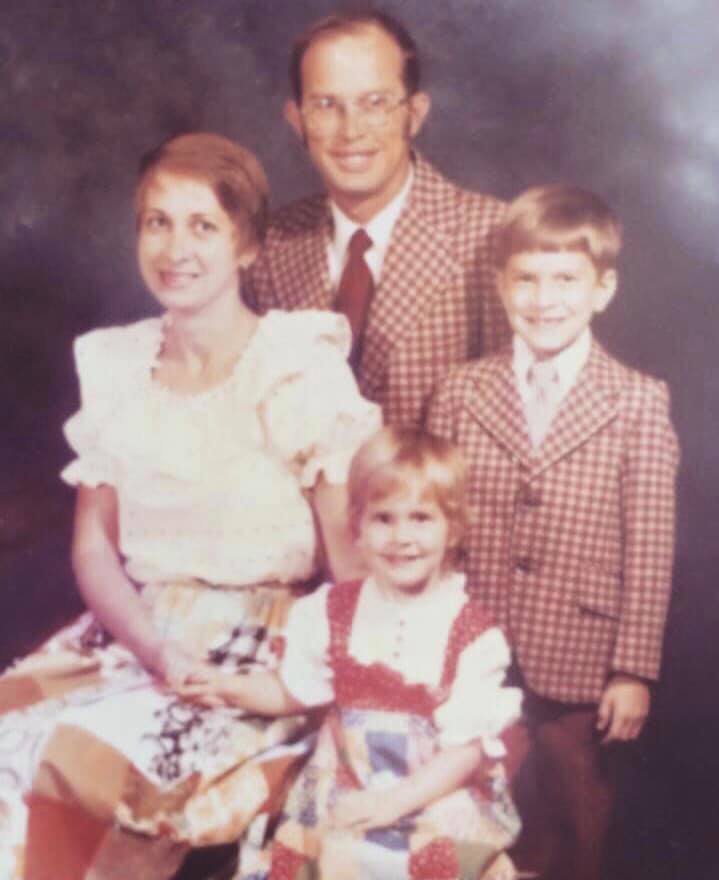
Happy 55th wedding anniversary to my amazing parents!
Like their parents before them, they continue to set a quiet example of unbounded altruism and unquestioning kindness, whether they're securing food, clothing and shelter for people in need; providing comfort and care for sick friends and strangers alike; prioritizing their lives around the needs and activities of their grandchildren; taking in their broken son and working fiercely to repatriate him through endless ups and downs; or simply providing a freshly baked pie for someone in need of delicious homemade goodness. They’ve gracefully faced challenges like my dad's macular degeneration and my mom’s breast cancer head-on, invited lonely people to join us for Christmas dinner, and good-naturedly endured constant ribbing from their children. The example they set for us is so genuine and so inspiring that I fear I can never do it justice in the way I live my life. They love us unconditionally and we gratefully love them back. I'm proud to call them my parents and I'm thrilled that I can laud them publicly so the people who are important to me can celebrate their anniversary with us.
Thursday, June 13, 2019
11 years ago today ...
Though I was living in Chicago at the time, I was in Cedar Rapids 11 years ago today to visit my folks for their June 14 anniversary. My boyfriend at the time and I had heard stories of looming flooding, and even though the rains and the swollen rivers diverted us north from highway 30 at Mt. Vernon and sent us into Cedar Rapids on Mt. Vernon Road, we still never believed Cedar Rapids could have serious flooding. I mean, it's CEDAR RAPIDS. I grew up here. How could anything bad happen?
By the time we finally got to my folks' house late on the 13th though, the flooding had become serious enough that the city's last intact water pumping station was in such danger of being breached that the urgent call went out on the news for volunteers to sandbag it. Though we'd had a 5-hour drive we wanted to go out and help, but by the time we had a quick bathroom break before heading for the door, the news announced that they'd already gotten all the sandbaggers they needed. Which was a clear harbinger of the resilience our city would soon show. But at the time it was dark and late and we were 32 blocks from the river so all we could do was go to bed and wait.
The next morning, the footage on the news was devastating. The river had crested at 31.12 feet—19 feet over flood stage—and our entire downtown was drowning, as were 1,300 blocks of the city on either side of the river. Office buildings and banks and stores and my beloved theaters were almost up to the tops of their doors in water. All three bridges that cross May's Island and connect the east and west sides of the city were completely submerged. The Time Check and Czech Village neighborhoods were destroyed, with many houses underwater to their rooflines. The highly elevated I-380 was the only way to get across town, though all of the entrance and exit ramps in the flood zone were submerged. We—like seemingly everyone else in the city—drove slowly along the highway and peered out our windows to survey the devastation as the flood waters rippled mere feet beneath us.
As the water slowly receded, the city reeled over the destruction of homes, the closing of businesses, the undermining of infrastructure ... but never the loss of spirit. The city leaped almost immediately into action to tear down what was unsalvageable, repair what was repairable, clean up what was messy and dangerous, reimagine new life and purpose for what was destroyed, and start to recover and relocate and rebuild ourselves into a newer and better and more thoughtfully redesigned shining city on the river. We now have our vibrant and ever-expanding NewBo district, we've literally picked up and moved an entire museum to higher ground, we've creatively and beautifully incorporated new levees and berms into inviting public spaces, we've used the opportunity to upgrade and restore historic buildings, we've turned our once-desolate-after-5:00 downtown into a destination area bustling with restaurants and entertainment ... and we've salvaged and restored and improved and polished up my beloved Paramount and Iowa (home of Theatre Cedar Rapids) theaters.
The flood was awful and heartwrenching and devastating. Many businesses never recovered. Many homes and families and lives have been forever changed. And our renaissance is far from complete. At any given time there are at least three massive construction/renovation projects happening in the downtown area, and I adjust my travel to and from work to check on them almost daily. Seriously. (Currently: The finishing touches on the towering modern addition to the American Building, the formidable new Skogman building that I still can’t decide if it’s exciting or boring (don't mess this up, Skogman—build something we can all appreciate and be proud of), the expanding Habitrail of skywalks, and the massive condo/apartment building that's covering more than a city block on the east side of I-380 at Diagonal Drive)
Aside from the before-and-after photos of my dad's office, where he thought two levels of concrete blocks would protect his antique roll-top desk from the floodwaters that eventually submerged his entire office past its ceiling, the pictures I'm posting here aren't mine. But they show the depth and breadth of the destruction we all faced and make a great reminder of how amazingly far we have come in the last ten years.
So happy floodiversary, Cedar Rapids! May we keep our recovery and flood-protection development speeding along forevermore. (And don't forget to wish my folks a happy 55th anniversary tomorrow.)
Third Street looking south from First Avenue. You can see the old Theatre Cedar Rapids marquee on the left.
Theatre Cedar Rapids. All the First Avenue storefronts on the left were shut down after the flood, and the space became the awesome new Linge Lounge.
Dad’s office—and beautiful oak roll-top desk—before and after the flood. The desk was in salvageable, and everything in it got ripped out and carried away by the floodwaters.
1,300 blocks on both sides of the river were submerged—some under more than 10 feet of water.
Those ghostly lines in the water are the totally submerged bridges that cross May’s Island as they connect the east and west sides of the city.
That’s high-in-the-sky I-380 snaking through downtown with floodwater submerging its ramps and lapping at its floors.
The massive crown-jewel National Czech & Slovak Museum & Library building on the lower right was actually lifted and relocated to higher ground after the flood.
We parked this string of train cars on this essential train bridge before the flood to weigh it down so the floodwaters wouldn’t wash it away.
Entire neighborhoods. Families’ lives. Wiped out. No words.
The floodwaters floated the Mighty Wurlitzer organ console from the bottom of the Paramount Theater pit to above the stage, where they dumped it like a dirty carcass.
By the time we finally got to my folks' house late on the 13th though, the flooding had become serious enough that the city's last intact water pumping station was in such danger of being breached that the urgent call went out on the news for volunteers to sandbag it. Though we'd had a 5-hour drive we wanted to go out and help, but by the time we had a quick bathroom break before heading for the door, the news announced that they'd already gotten all the sandbaggers they needed. Which was a clear harbinger of the resilience our city would soon show. But at the time it was dark and late and we were 32 blocks from the river so all we could do was go to bed and wait.
The next morning, the footage on the news was devastating. The river had crested at 31.12 feet—19 feet over flood stage—and our entire downtown was drowning, as were 1,300 blocks of the city on either side of the river. Office buildings and banks and stores and my beloved theaters were almost up to the tops of their doors in water. All three bridges that cross May's Island and connect the east and west sides of the city were completely submerged. The Time Check and Czech Village neighborhoods were destroyed, with many houses underwater to their rooflines. The highly elevated I-380 was the only way to get across town, though all of the entrance and exit ramps in the flood zone were submerged. We—like seemingly everyone else in the city—drove slowly along the highway and peered out our windows to survey the devastation as the flood waters rippled mere feet beneath us.
As the water slowly receded, the city reeled over the destruction of homes, the closing of businesses, the undermining of infrastructure ... but never the loss of spirit. The city leaped almost immediately into action to tear down what was unsalvageable, repair what was repairable, clean up what was messy and dangerous, reimagine new life and purpose for what was destroyed, and start to recover and relocate and rebuild ourselves into a newer and better and more thoughtfully redesigned shining city on the river. We now have our vibrant and ever-expanding NewBo district, we've literally picked up and moved an entire museum to higher ground, we've creatively and beautifully incorporated new levees and berms into inviting public spaces, we've used the opportunity to upgrade and restore historic buildings, we've turned our once-desolate-after-5:00 downtown into a destination area bustling with restaurants and entertainment ... and we've salvaged and restored and improved and polished up my beloved Paramount and Iowa (home of Theatre Cedar Rapids) theaters.
The flood was awful and heartwrenching and devastating. Many businesses never recovered. Many homes and families and lives have been forever changed. And our renaissance is far from complete. At any given time there are at least three massive construction/renovation projects happening in the downtown area, and I adjust my travel to and from work to check on them almost daily. Seriously. (Currently: The finishing touches on the towering modern addition to the American Building, the formidable new Skogman building that I still can’t decide if it’s exciting or boring (don't mess this up, Skogman—build something we can all appreciate and be proud of), the expanding Habitrail of skywalks, and the massive condo/apartment building that's covering more than a city block on the east side of I-380 at Diagonal Drive)
Aside from the before-and-after photos of my dad's office, where he thought two levels of concrete blocks would protect his antique roll-top desk from the floodwaters that eventually submerged his entire office past its ceiling, the pictures I'm posting here aren't mine. But they show the depth and breadth of the destruction we all faced and make a great reminder of how amazingly far we have come in the last ten years.
So happy floodiversary, Cedar Rapids! May we keep our recovery and flood-protection development speeding along forevermore. (And don't forget to wish my folks a happy 55th anniversary tomorrow.)
Third Street looking south from First Avenue. You can see the old Theatre Cedar Rapids marquee on the left.
Theatre Cedar Rapids. All the First Avenue storefronts on the left were shut down after the flood, and the space became the awesome new Linge Lounge.
Dad’s office—and beautiful oak roll-top desk—before and after the flood. The desk was in salvageable, and everything in it got ripped out and carried away by the floodwaters.
1,300 blocks on both sides of the river were submerged—some under more than 10 feet of water.
Those ghostly lines in the water are the totally submerged bridges that cross May’s Island as they connect the east and west sides of the city.
That’s high-in-the-sky I-380 snaking through downtown with floodwater submerging its ramps and lapping at its floors.
The massive crown-jewel National Czech & Slovak Museum & Library building on the lower right was actually lifted and relocated to higher ground after the flood.
We parked this string of train cars on this essential train bridge before the flood to weigh it down so the floodwaters wouldn’t wash it away.
Entire neighborhoods. Families’ lives. Wiped out. No words.
The floodwaters floated the Mighty Wurlitzer organ console from the bottom of the Paramount Theater pit to above the stage, where they dumped it like a dirty carcass.
Monday, April 15, 2019
Next to Normal—a searingly brilliant rock opera examining the lives of a family whose mother is struggling with bipolar depression—opened on Broadway 10 years ago today
The show beautifully captures the swings between the ridiculous highs and the soul-crushing lows the disease brings to us living in it and to the selfless teams of people who care for us.
I’m fortunate enough to have seen the original production, very soon after I’d been diagnosed as bipolar and had found myself caught in a rather terrifying struggle to wrap my confused, exhausted brain around the fact that mental illness was no longer a mysterious entity in other people’s lives; it was MY LIFE, and I had no idea how to manage it or what potential and very real horrors to expect from it.
The musical is rough to experience from any perspective, but seeing it for the first time tore me apart ... and then put me back together with its closing anthem, “Light,” which features an almost casually placed lyric that is at once devastating and hopeful and never fails to sneak up on me and emotionally gut me even though I know it’s coming: “The price of love is loss / but still we pay / we love anyway.”
Back when I saw the show on Broadway, selfies were new and weird and shameful—and for you young folks, it was the Middle Ages when our smart phones had single cameras that didn’t let us see on our screens what our selfies would look like so we just had to hold our phones in the air and hope for the best—so I took this selfie as one-shot quickly and discreetly as I could to ensure an entire city of complete strangers wouldn’t judge me. It turned out rather well, although I cut off the last letter of the sign. Which means as far as any of you know, I actually just saw a knockoff production called Next to Norma:
I’m fortunate enough to have seen the original production, very soon after I’d been diagnosed as bipolar and had found myself caught in a rather terrifying struggle to wrap my confused, exhausted brain around the fact that mental illness was no longer a mysterious entity in other people’s lives; it was MY LIFE, and I had no idea how to manage it or what potential and very real horrors to expect from it.
The musical is rough to experience from any perspective, but seeing it for the first time tore me apart ... and then put me back together with its closing anthem, “Light,” which features an almost casually placed lyric that is at once devastating and hopeful and never fails to sneak up on me and emotionally gut me even though I know it’s coming: “The price of love is loss / but still we pay / we love anyway.”
Back when I saw the show on Broadway, selfies were new and weird and shameful—and for you young folks, it was the Middle Ages when our smart phones had single cameras that didn’t let us see on our screens what our selfies would look like so we just had to hold our phones in the air and hope for the best—so I took this selfie as one-shot quickly and discreetly as I could to ensure an entire city of complete strangers wouldn’t judge me. It turned out rather well, although I cut off the last letter of the sign. Which means as far as any of you know, I actually just saw a knockoff production called Next to Norma:
Coe College in Cedar Rapids opened a production of Next to Normal last weekend that runs through this weekend. I was asked to have a QA with the cast a few weeks ago to help them create hopefully more informed characters, and I’m honored to be giving talkbacks with the audiences after every performance this coming weekend—starting this Thursday, April 18, which is my birthday, and I can’t think of a better way to keep my mind off the number fifty (ahem) one. I’d add a link here, but I can’t get one to load on my phone that I can copy. So google it and come see the show if you can. The show will change you.
Day after day,
We'll find the will to find our way.
Knowing that the darkest skies
Will someday see the sun.
When our long night is done,
There will be light.
Day after day,
We'll find the will to find our way.
Knowing that the darkest skies
Will someday see the sun.
When our long night is done,
There will be light.
Sunday, April 14, 2019
The RMS Titanic hit an iceberg and started sinking 107 years ago today, at almost exactly the time I’m posting this
I’ve had a lifelong fascination with the tragedy—mostly from the perspective of wanting to know what it was like to be on such a grand ship ... and then to have it slowly, terrifyingly disappear under my feet. I’ve recorded the sinking as an annual event on my google calendar so I get a pop-up reminder every year to take a moment to think about the people who died and the horrors they and the survivors endured.
I just saw a matinee of the incredible musical Come From Away, which tells the story of the small town in Newfoundland that almost doubled in size for a week when American airspace was closed on 9/11 and flights from all over the world were diverted there. Now every flight out of NYC was canceled tonight due to weather, and I’m stranded here until Tuesday. But I’m safe. And I’ve found that these two events have subtly enriched whatever emotional connection I’ve given myself to the Titanic passengers and crew I technically know nothing about but still mourn.
Don’t wait for tragedy. Don’t wait for averted tragedy. Take a moment every day to be thankful for the people you love in your life.
I just saw a matinee of the incredible musical Come From Away, which tells the story of the small town in Newfoundland that almost doubled in size for a week when American airspace was closed on 9/11 and flights from all over the world were diverted there. Now every flight out of NYC was canceled tonight due to weather, and I’m stranded here until Tuesday. But I’m safe. And I’ve found that these two events have subtly enriched whatever emotional connection I’ve given myself to the Titanic passengers and crew I technically know nothing about but still mourn.
Don’t wait for tragedy. Don’t wait for averted tragedy. Take a moment every day to be thankful for the people you love in your life.
Thursday, April 04, 2019
Still here
Happy 48th anniversary to Follies, the glorious, epic, mold-breaking 1971 musical by Stephen Sondheim, James Goldman, Hal Prince and Michael Bennett that ended up being too lavish and probably too jarringly mold-breaking for its own good. The most expensive Broadway production to date when it opened, it drew effusive critical praise but didn't get the musical-theater-pantheon foothold it deserved and closed after 500 performances without recouping any of its investments.
I was unfortunately three when it opened and I couldn't get tickets, but my heart and endless fascination and I were eventually—inevitably—pulled into its magical, inspiring, gorgeous, heartbreaking world when I saw the 1987 London revival, which gave Eartha Kitt a much-needed comeback when she replaced the broken-ankled Delores Gray (just like what happened to her in 42nd Street!) to belt the iconic "I'm Still Here"—which, as coincidences never cease, was the song in the 1971 production that brought Yvonne De Carlo back from the brink of terminal embarrassment after playing Lily Munster on TV.
Thankfully—inevitably—Follies has since then finally achieved the musical-theater-pantheon stature it deserves, and I've been fortunate enough to have seen more productions of it than I can count in New York, D.C., Chicago and beyond. I'm obviously overflowing with fanboy knowledge and trivia and opinions and lyrics (oh boy, am I overflowing with lyrics) about the show, but if I even want to come close to sharing everything about its brilliance that's waiting to burst out of me, I'll have to schedule a six-week subscription-series symposium at a local college to get it all Jakesplained to you.
Fun fact: It opened at the Winter Garden Theater in NYC, which—again with the coincidences—is the theater where I just so happen to have seen my first-ever Broadway show (Cats, the fact of which I am hard-stop-sun-comes-up-coffee-cup not willing to discuss).
I was unfortunately three when it opened and I couldn't get tickets, but my heart and endless fascination and I were eventually—inevitably—pulled into its magical, inspiring, gorgeous, heartbreaking world when I saw the 1987 London revival, which gave Eartha Kitt a much-needed comeback when she replaced the broken-ankled Delores Gray (just like what happened to her in 42nd Street!) to belt the iconic "I'm Still Here"—which, as coincidences never cease, was the song in the 1971 production that brought Yvonne De Carlo back from the brink of terminal embarrassment after playing Lily Munster on TV.
Thankfully—inevitably—Follies has since then finally achieved the musical-theater-pantheon stature it deserves, and I've been fortunate enough to have seen more productions of it than I can count in New York, D.C., Chicago and beyond. I'm obviously overflowing with fanboy knowledge and trivia and opinions and lyrics (oh boy, am I overflowing with lyrics) about the show, but if I even want to come close to sharing everything about its brilliance that's waiting to burst out of me, I'll have to schedule a six-week subscription-series symposium at a local college to get it all Jakesplained to you.
Fun fact: It opened at the Winter Garden Theater in NYC, which—again with the coincidences—is the theater where I just so happen to have seen my first-ever Broadway show (Cats, the fact of which I am hard-stop-sun-comes-up-coffee-cup not willing to discuss).
Sunday, March 31, 2019
It’s my 15th Cedar Rapids Follies!
We just had an increments-of-five-years-anniversary-celebrating cast meeting before our final show and I got a nice card and a packet of granulated silica gel. It was in with a star-shaped metal box engraved with my name. Which is nice too.
Now the house lights have dimmed, the audience has hushed, the curtain speech is underway and our final first downbeat is in 3 ... 2 ... 1 ...
Friday, March 01, 2019
Think of it as thrift ... as a gift ...
40 years ago tonight, Broadway theater audiences first attended the tale of a vindictive, murderous barber, learned the words lavabo and reticule, realized that nothing rhymes with locksmith, split both literal and figurative hairs between flaxen and blonde, discovered that coriander makes the gravy grander, agreed that poppin' pussies into pies is perhaps the very definition of enterprise, and didn't feel one bit sorry for that crazy hag Lucy because it was Mrs. Lovett who had made his arm complete again after all those years.
Happy anniversary, Sweeney Todd! I can’t come to your party tonight, but I’ll come again when you have judge on the menu.
Sunday, February 24, 2019
I wish I’d written this truly inspired silliness,
if for no other reason than to have a plausible backstory explaining why I’ve never tickled the ivories to Beethoven’s 5th Symphony on any of my parents’ anniversaries.
And so all this helicopter knowledge won’t go to waste.
Sunday, February 03, 2019
Friday, January 25, 2019
10 things I remember about my Grandma Stigers
1. She made peach preserves in enormous glass jars every year to share with everyone in the family. Each jar had a cinnamon stick in it, which I thought was weird as a kid because cinnamon of course doesn't go with peaches but that never stopped me from piling indulgent amounts of the preserves on everything I could think of.
2. When her daughter--a young mother--lost her husband to cancer, my grandparents renovated their basement to give her and her kids a free, safe place to live so they could care for them until they recovered and got back on their feet.
3. She put up with my dad--who even by his own accounts was a handful and a seeker of trouble and somebody I probably wouldn't have liked if we'd been peers--and turned him into the father I love and respect and look up to today.
4. She loved to sing. Oh, how she loved to sing. Her rich contralto filled her church when she sang hymns and filled her home whenever we gathered around her piano or the gorgeous antique pump organ she had that was never in tune and virtually impossible to play but it never mattered because she was so full of joy from singing.
5. Her hair was so gray that it went beyond silver into the realm of misty purple-blue. And she had a wardrobe of purple clip-on earrings that always matched her hair perfectly.
6. She and my grandfather had a little black mutt named Rags, who was sweet and attentive and docile but always kinda smelled like he needed a bath.
7. She loved to make ceramics for people and she actually had a kiln in her basement. She'd paint and glaze each piece, etch her name and the year on the bottom, and fire up beautiful ornaments and decorations that I'm sure still grace the homes of friends and extended family from coast to coast.
8. She had a dishwasher that rolled around the kitchen and connected to the sink faucet with a hose. This really has nothing to do with her as a person, but when you're a kid and your grandmother has a dishwasher that rolls around the kitchen and connects to the sink faucet with a hose, that makes her pretty darn interesting.
9. She was unfortunately enthusiastic about thumping us kids on the head with her finger or some other small weapon--both as punishment and for her own entertainment. She called herself Granny Great-Thump. We called her Granny Great-Rump.
10. She and my grandfather had an enclosed back porch that ran nearly the entire length of their house, with enough room for a long table and plenty of chairs for feeding a steady parade of family and friends. They even had tiny paper lanterns hanging from the ceiling, which I always thought made the place extra-festive.
Grandma died 20 years ago today, after living trapped in the aftermath of a stroke for many months. She lived exponentially farther away from me than my other grandmother when I was a kid, so I didn't see her as often and I never really felt like I knew her. But she influenced my dad to be the kind, loving, decent, respected man he is, and I hope to think he's influenced me to be the same. So she lives on in our hearts and in our family and in yet another generation as my niece and nephew carry on the examples of kindness and love and decency that she lived.
2. When her daughter--a young mother--lost her husband to cancer, my grandparents renovated their basement to give her and her kids a free, safe place to live so they could care for them until they recovered and got back on their feet.
3. She put up with my dad--who even by his own accounts was a handful and a seeker of trouble and somebody I probably wouldn't have liked if we'd been peers--and turned him into the father I love and respect and look up to today.
4. She loved to sing. Oh, how she loved to sing. Her rich contralto filled her church when she sang hymns and filled her home whenever we gathered around her piano or the gorgeous antique pump organ she had that was never in tune and virtually impossible to play but it never mattered because she was so full of joy from singing.
5. Her hair was so gray that it went beyond silver into the realm of misty purple-blue. And she had a wardrobe of purple clip-on earrings that always matched her hair perfectly.
6. She and my grandfather had a little black mutt named Rags, who was sweet and attentive and docile but always kinda smelled like he needed a bath.
7. She loved to make ceramics for people and she actually had a kiln in her basement. She'd paint and glaze each piece, etch her name and the year on the bottom, and fire up beautiful ornaments and decorations that I'm sure still grace the homes of friends and extended family from coast to coast.
8. She had a dishwasher that rolled around the kitchen and connected to the sink faucet with a hose. This really has nothing to do with her as a person, but when you're a kid and your grandmother has a dishwasher that rolls around the kitchen and connects to the sink faucet with a hose, that makes her pretty darn interesting.
9. She was unfortunately enthusiastic about thumping us kids on the head with her finger or some other small weapon--both as punishment and for her own entertainment. She called herself Granny Great-Thump. We called her Granny Great-Rump.
10. She and my grandfather had an enclosed back porch that ran nearly the entire length of their house, with enough room for a long table and plenty of chairs for feeding a steady parade of family and friends. They even had tiny paper lanterns hanging from the ceiling, which I always thought made the place extra-festive.
Grandma died 20 years ago today, after living trapped in the aftermath of a stroke for many months. She lived exponentially farther away from me than my other grandmother when I was a kid, so I didn't see her as often and I never really felt like I knew her. But she influenced my dad to be the kind, loving, decent, respected man he is, and I hope to think he's influenced me to be the same. So she lives on in our hearts and in our family and in yet another generation as my niece and nephew carry on the examples of kindness and love and decency that she lived.
Labels:
anniversaries,
death,
dogs,
family,
grandparents,
lists,
memorials,
singing
Friday, December 21, 2018
Excerpted from the Journal of Personal & Interpersonal Loss:
Twenty years ago—on the 10th anniversary of the bombing of Pan Am Flight 103—I was invited to write a personal remembrance of the event for the scholarly Journal of Personal & Interpersonal Loss through the psychology department at the University of Iowa. My copy of the publication currently sits in a box somewhere in storage, but I was able to dig up a transcript of the preamble I wrote for the piece, which I thought would be fitting to share today, on the 30th anniversary:
Excerpted from "Surviving the Bombing of Pan Am Flight 103: The Loss of Innocence and a Dear Friend in an International Tragedy." Journal of Personal & Interpersonal Loss, Vol. 3, No. 1, January–March 1998. Pages 117–134. Publisher: Taylor & Francis.
On December 21, 1988, a terrorist bomb blew Pan Am Flight 103 out of the sky over Lockerbie, Scotland, 54 minutes after it took off from London's Heathrow Airport. The explosion sent 259 passengers and crew members tumbling 6 miles to their deaths, killed 11 people on the ground, and created waves of shock and grief that continue to reverberate across the globe. My friend Miriam Wolfe, one of 35 students returning from a semester in London under the auspices of Syracuse University, was on that flight. Her death was the final, jarring event in a traumatic year that had brought me the accidental deaths of four other friends in an Easter plane crash and the breast cancer that would force my mother to endure a mastectomy and painful years of chemotherapy and drug treatments. While it is tempting to canonize the victims of violent disaster, Miriam was different—and inarguably deserving of such hagiography. A tribute written for one of three memorial scholarships established in her honor calls her "a rare and gifted young woman who lived life to the fullest; actively worked to change the world for the better; and gave a great deal of love, joy and wisdom to all who knew her." Her death yanked me from the comfortable naiveté of my youth and forced me to confront the pain and confusion of the adult world. It destroyed my faith in the inherent good of mankind but showed me how disaster can bring out the best in people. It gave me a nihilistic view of life but forced me to make the most of every moment I have. It made me appreciate the people around me but gave me little tolerance for anyone who wastes my time. And it instilled in me a knee-jerk animus toward religion and nearly all things Middle Eastern. Ultimately, though, Miriam's life and death taught me how to live and love and survive in ways I never thought necessary—or possible.
Excerpted from "Surviving the Bombing of Pan Am Flight 103: The Loss of Innocence and a Dear Friend in an International Tragedy." Journal of Personal & Interpersonal Loss, Vol. 3, No. 1, January–March 1998. Pages 117–134. Publisher: Taylor & Francis.
Thirty years ago today ...
I’d finished my classes for the semester and my dad had come to pick me up from college for the holiday break. 1988 had been an emotional roller coaster for our family. We’d lost four family friends in a small plane crash Easter morning, my mom had undergone a radical mastectomy in October and she was just starting her first rounds of chemo before Christmas. I was in the middle of my junior year in college, and I’d finally found a major I was willing to stick with: English. But since I’d waited a full two years to admit to myself I always should have been an English major, I had a lot of catching up to do. And my first-semester courseload had been heavy.
December 21 is the winter solstice—the day of the year with the shortest amount of sunlight—but it was beautiful and sunny in Eastern Iowa that afternoon in 1988. And Dad and I had a nice chat over the 40-minute drive home. My family has always been close, so when we saw Mom standing in the driveway as we pulled up to the house, I figured she was just excited to see me.
But she was sobbing.
I assumed she’d gotten some bad news about her cancer while Dad was gone, so I jumped out of the car before it even came to a stop and I ran up to hug her. But the bad news was something entirely different ... something so random and so unexpected that the shock of the words literally didn't make sense to me: Miriam’s plane had gone down.
Miriam was a friend of mine who had spent the 1988 autumn semester in London studying under the auspices of Syracuse University. I’d just visited her over the Thanksgiving break, and we’d had an awesome time seeing the sights, exploring the museums and taking in all the shows we could afford on our college-student budgets. Among the four we saw were Les Misérables and what ended up being a definitive revival of Stephen Sondheim’s Follies. Sondheim was just starting to appear on our collective radar, and we both agreed that seeing Follies together was a mountaintop experience for us to have shared over our magical week together in London.
But by December 21, I’d come home, a whole month had passed and I’d been so caught up in my finals and holiday preparations that I’d had no idea Miriam was flying back to the States that day—much less what flight she was on. Neither had my mom. But our friend Jody in Ohio did. And when the initial reports that Pan Am flight 103 had disappeared out of the sky over Lockerbie, Scotland, started washing over the newswires, Jody had called everyone she could think of.
Mom and Dad and I raced to the family room and crowded around the TV that crisp, sunny Iowa afternoon to see what we could find out about Miriam’s plane. It was the early days of CNN and 24-hour news, so we were able to get (spotty) information right away about the mysterious crash, along with grainy images of the wreckage shining dimly in the emergency lights that were working so hard to pierce the solstice blackness six time zones away. Dimly seeing what we could of it and haltingly learning more and more about it over the next hours was at once horrifying and comforting, filling us with both hopefulness and helplessness.
Over the next few months and weeks, the world came to learn about the bomb, the Libyans, the retribution, the embargoes, the bankruptcies. We cautiously wrapped our brains around the unthinkable efficiencies of global terrorism at the dawn of the Information Age. And the friends and families of the victims of the 103 bombing started experiencing the bizarre dichotomy of watching our personal tragedy play itself out on the world stage.
In the years since Miriam’s murder, I’ve befriended her parents and friends. I’ve gotten in touch with the roommates she lived with in London, none of whom had been on her plane with her that day. I’ve written pieces about my relatively removed perspective on the bombing that were published in newspapers and scholarly journals and read on NPR. And since I had been in London and had hung out with a lot of the murdered Syracuse students a month before the bombing, I’ve actually been interviewed by the FBI.
And as I’ve grieved and matured over the last thirty years, I’ve discovered that I now tend to be efficiently emotionless when I hear about catastrophic tragedies like the 9/11 attacks and the Stoneman Douglas massacre and the devastating 2018 wildfires ... though I’ll still burst into tears over emotional pablum like Christmas cookie commercials.
Thirty years ago today, the world learned what a volatile mix misanthropy and religion and blind nationalism can be in a global melting pot.
Thirty years ago today, Miriam and her fellow passengers and their families and friends learned violently and unwillingly about harsh brutalities that the rest of the world got the relative luxury of absorbing over time.
Thirty years ago today, I learned that the distant tragedies that so often happen to “other people” should never be observed as abstractions.
I discovered that news of plane crashes and acts of terrorism that play endlessly in 24-hour news cycles can be both disturbing and strangely comforting. I learned that life is precious, that there are no guarantees, that people who waste your time are robbing you of a precious and very limited possession, that small gestures can make heroic impressions, that your pain and suffering and anguish and heartbreak both do and don't make you special, that no matter how bad it gets you should work to find solace in the fact that it will probably get better … or at least easier.
Thirty years is enough time for someone to raise a child and send him or her off into the world. Enough time for eight presidential elections and four new Sondheim musicals. (Six, if you count Saturday Night and The Frogs.)
It’s enough time for a gangly, unsure college boy to cycle through four cars and eight houses and eight jobs and three cities as he grows into a successful (more or less), confident (more or less) man.
It’s enough time for him to realize that the world is not fair. That bad things happen to good people. That the bad people who did them don’t always get punished. That horrible tragedy gets easier to accept over time, even though it remains impossible to forget. That the hate that some people burn into your heart never entirely leaves ... and that the smug, satisfied self-righteousness you experience when you finally see images of the bloodied, abused corpse of Moammar Gadhafi—who denied to his last hopefully excruciating, terrified breath every credible report that he'd ordered the Pan Am bombing—feels powerfully good.
I often wonder what Miriam would be if she were alive today. Tony-winning actor? International journalist? Have-it-all mom? She was among those people you just knew were going somewhere big with their lives. I’m sure that wherever the fates would have taken her, she’d be someone people knew about.
I also wonder if we would still be friends. We’d met that summer when we were singing and dancing in the shows at Darien Lake amusement park just outside Buffalo, New York. Our friendship lasted just seven months until she was murdered. I’m only barely in touch with the other friends I made at the park that summer. Miriam’s family and I aren’t in touch nearly as much as I’d like either (though her mother recently published a book of Miriam's writings along with essays from people who knew and loved her, including me).
Would Miriam and I have drifted apart as well?
Since at this point I’m the only one in control of our story, I choose to believe that by now I’d have sung in her wedding and befriended her kids on Facebook and marched in pink hats with her in Washington and lost countless hours texting ridiculous memes back and forth with her.
And I’m pretty sure she’d have written the same story for me if our fates had been reversed.
Thirty years ago today was the last, devastating act in a year that had shaken—and strengthened—my family to its core. It was the day my worldview changed from naive to guarded, from optimistic to cynical, from insular to secular.
It was the day my friend Miriam was murdered.
And it was just another day for most people.
And though the world continues to spin forward—as it should—and people’s memories continue to fade—as they do—I will never forget.
December 21 is the winter solstice—the day of the year with the shortest amount of sunlight—but it was beautiful and sunny in Eastern Iowa that afternoon in 1988. And Dad and I had a nice chat over the 40-minute drive home. My family has always been close, so when we saw Mom standing in the driveway as we pulled up to the house, I figured she was just excited to see me.
But she was sobbing.
I assumed she’d gotten some bad news about her cancer while Dad was gone, so I jumped out of the car before it even came to a stop and I ran up to hug her. But the bad news was something entirely different ... something so random and so unexpected that the shock of the words literally didn't make sense to me: Miriam’s plane had gone down.
Miriam was a friend of mine who had spent the 1988 autumn semester in London studying under the auspices of Syracuse University. I’d just visited her over the Thanksgiving break, and we’d had an awesome time seeing the sights, exploring the museums and taking in all the shows we could afford on our college-student budgets. Among the four we saw were Les Misérables and what ended up being a definitive revival of Stephen Sondheim’s Follies. Sondheim was just starting to appear on our collective radar, and we both agreed that seeing Follies together was a mountaintop experience for us to have shared over our magical week together in London.
But by December 21, I’d come home, a whole month had passed and I’d been so caught up in my finals and holiday preparations that I’d had no idea Miriam was flying back to the States that day—much less what flight she was on. Neither had my mom. But our friend Jody in Ohio did. And when the initial reports that Pan Am flight 103 had disappeared out of the sky over Lockerbie, Scotland, started washing over the newswires, Jody had called everyone she could think of.
Mom and Dad and I raced to the family room and crowded around the TV that crisp, sunny Iowa afternoon to see what we could find out about Miriam’s plane. It was the early days of CNN and 24-hour news, so we were able to get (spotty) information right away about the mysterious crash, along with grainy images of the wreckage shining dimly in the emergency lights that were working so hard to pierce the solstice blackness six time zones away. Dimly seeing what we could of it and haltingly learning more and more about it over the next hours was at once horrifying and comforting, filling us with both hopefulness and helplessness.
Over the next few months and weeks, the world came to learn about the bomb, the Libyans, the retribution, the embargoes, the bankruptcies. We cautiously wrapped our brains around the unthinkable efficiencies of global terrorism at the dawn of the Information Age. And the friends and families of the victims of the 103 bombing started experiencing the bizarre dichotomy of watching our personal tragedy play itself out on the world stage.
In the years since Miriam’s murder, I’ve befriended her parents and friends. I’ve gotten in touch with the roommates she lived with in London, none of whom had been on her plane with her that day. I’ve written pieces about my relatively removed perspective on the bombing that were published in newspapers and scholarly journals and read on NPR. And since I had been in London and had hung out with a lot of the murdered Syracuse students a month before the bombing, I’ve actually been interviewed by the FBI.
And as I’ve grieved and matured over the last thirty years, I’ve discovered that I now tend to be efficiently emotionless when I hear about catastrophic tragedies like the 9/11 attacks and the Stoneman Douglas massacre and the devastating 2018 wildfires ... though I’ll still burst into tears over emotional pablum like Christmas cookie commercials.
Thirty years ago today, the world learned what a volatile mix misanthropy and religion and blind nationalism can be in a global melting pot.
Thirty years ago today, Miriam and her fellow passengers and their families and friends learned violently and unwillingly about harsh brutalities that the rest of the world got the relative luxury of absorbing over time.
Thirty years ago today, I learned that the distant tragedies that so often happen to “other people” should never be observed as abstractions.
I discovered that news of plane crashes and acts of terrorism that play endlessly in 24-hour news cycles can be both disturbing and strangely comforting. I learned that life is precious, that there are no guarantees, that people who waste your time are robbing you of a precious and very limited possession, that small gestures can make heroic impressions, that your pain and suffering and anguish and heartbreak both do and don't make you special, that no matter how bad it gets you should work to find solace in the fact that it will probably get better … or at least easier.
Thirty years is enough time for someone to raise a child and send him or her off into the world. Enough time for eight presidential elections and four new Sondheim musicals. (Six, if you count Saturday Night and The Frogs.)
It’s enough time for a gangly, unsure college boy to cycle through four cars and eight houses and eight jobs and three cities as he grows into a successful (more or less), confident (more or less) man.
It’s enough time for him to realize that the world is not fair. That bad things happen to good people. That the bad people who did them don’t always get punished. That horrible tragedy gets easier to accept over time, even though it remains impossible to forget. That the hate that some people burn into your heart never entirely leaves ... and that the smug, satisfied self-righteousness you experience when you finally see images of the bloodied, abused corpse of Moammar Gadhafi—who denied to his last hopefully excruciating, terrified breath every credible report that he'd ordered the Pan Am bombing—feels powerfully good.
I often wonder what Miriam would be if she were alive today. Tony-winning actor? International journalist? Have-it-all mom? She was among those people you just knew were going somewhere big with their lives. I’m sure that wherever the fates would have taken her, she’d be someone people knew about.
I also wonder if we would still be friends. We’d met that summer when we were singing and dancing in the shows at Darien Lake amusement park just outside Buffalo, New York. Our friendship lasted just seven months until she was murdered. I’m only barely in touch with the other friends I made at the park that summer. Miriam’s family and I aren’t in touch nearly as much as I’d like either (though her mother recently published a book of Miriam's writings along with essays from people who knew and loved her, including me).
Would Miriam and I have drifted apart as well?
Since at this point I’m the only one in control of our story, I choose to believe that by now I’d have sung in her wedding and befriended her kids on Facebook and marched in pink hats with her in Washington and lost countless hours texting ridiculous memes back and forth with her.
And I’m pretty sure she’d have written the same story for me if our fates had been reversed.
Thirty years ago today was the last, devastating act in a year that had shaken—and strengthened—my family to its core. It was the day my worldview changed from naive to guarded, from optimistic to cynical, from insular to secular.
It was the day my friend Miriam was murdered.
And it was just another day for most people.
And though the world continues to spin forward—as it should—and people’s memories continue to fade—as they do—I will never forget.
Labels:
9/11,
anniversaries,
cancer,
CNN,
college,
family,
Follies,
friends,
Les Misérables,
London,
mass shootings,
memorials,
murder,
NPR,
Pan Am Flight 103,
terrorism,
wildfires
Sunday, November 11, 2018
11/11/11
My grandpa Lawrence Arthur—who joined my grandpa Arthur LeRoy to be the inspiration for my middle name—served in World War I with his three brothers Ole, Gustav and Robert. They build bridges in Russia, built hospitals in France and served stateside when the war ended.
Grandpa Arthur LeRoy was a veterinarian during World War II who was promoted to battlefield surgeon on the front lines in the Philippines and Okinawa.
My dad was in the Army at the very early days of the Vietnam War, serving in Thailand and the Philippines triangulating radio signals to find their broadcast locations. I unfortunately can’t find a photo of him in uniform.
11:00 today—the eleventh hour of the eleventh day of the eleventh month—marks the 100th anniversary of the end of World War I, when the Allies signed the armistice with Germany, and the United States 11th Field Artillery Regiment fired the symbolic closing shot of the war.
I can't even begin to describe how much respect and appreciation I have for my veteran forebears, along with all of our country’s active duty and veteran military personnel. Past and present, they live vastly different lives when they're worlds away from us and once they return and live among us as well. The anguish they feel when they're waiting to be deployed. The abject terror they live with every day when they're on the front lines. The thought that the friendships they build can be ripped from them in one explosion, one hail of gunfire, one sunken ship, one innocent step on a land mine. The survivor's guilt when they return home but their friends and comrades-in-arms don't. But all their work, their sacrifices, their days of boredom and nights of fear continue to keep all of us back home safe from what they lived and continue to live with for months and years at a time.
I'm humbled by their selfless sacrifices and their service. I'm proud to have so many veteran relatives and friends to be proud of. And in awe of. And thankful for.
Thank you.
Grandpa Arthur LeRoy was a veterinarian during World War II who was promoted to battlefield surgeon on the front lines in the Philippines and Okinawa.
My dad was in the Army at the very early days of the Vietnam War, serving in Thailand and the Philippines triangulating radio signals to find their broadcast locations. I unfortunately can’t find a photo of him in uniform.
11:00 today—the eleventh hour of the eleventh day of the eleventh month—marks the 100th anniversary of the end of World War I, when the Allies signed the armistice with Germany, and the United States 11th Field Artillery Regiment fired the symbolic closing shot of the war.
I can't even begin to describe how much respect and appreciation I have for my veteran forebears, along with all of our country’s active duty and veteran military personnel. Past and present, they live vastly different lives when they're worlds away from us and once they return and live among us as well. The anguish they feel when they're waiting to be deployed. The abject terror they live with every day when they're on the front lines. The thought that the friendships they build can be ripped from them in one explosion, one hail of gunfire, one sunken ship, one innocent step on a land mine. The survivor's guilt when they return home but their friends and comrades-in-arms don't. But all their work, their sacrifices, their days of boredom and nights of fear continue to keep all of us back home safe from what they lived and continue to live with for months and years at a time.
I'm humbled by their selfless sacrifices and their service. I'm proud to have so many veteran relatives and friends to be proud of. And in awe of. And thankful for.
Thank you.
Sunday, October 07, 2018
Mom is 30 YEARS CANCER FREE!
We’re celebrating this morning with 10,000+ survivors, families and friends in the Especially For You Race Against Breast Cancer run/walk.
Monday, September 17, 2018
Don't say that ... it's "whom."
There is a moment near the end of The Goat, or Who is Sylvia?—Edward Albee's 2002 play exploring the outer limits of love, fidelity, morality and tolerance—where the emotional crisis at the center of the narrative boils over into such catastrophic levels of heartache and rage and such Greek-tragedy levels of destruction and retribution that the first time I saw it—and the second time and the third time and the fourth time—the audience collectively gasped to the point of almost screaming and then sat rigidly and almost palpably silent until well after the final stage light had extinguished and the last emotionally drained actor had silently moved into position for the company bow.
It's one of my two favorite—if there even exists a favorite-not favorite continuum of cataclysmic emotional destruction—moments in modern theater ... the other being the last three seconds of David Mamet's Oleanna before the stage becomes abruptly, dreadfully dark.
Though he's largely a genre unto himself, it's difficult to pigeonhole Edward Albee as a playwright. He wrote or adapted about 30 works that epitomized movements like Theatre of the Absurd and brought popular works of fiction like The Ballad of the Sad Café and Breakfast at Tiffany's to the stage and screen.
My favorite Albee works—Who's Afraid of Virginia Woolf? (embodied in this photo by the incomparable Richard Burton and Elizabeth Taylor playing the American-experiment patriarch and matriarch George and Martha), The Play About the Baby and The Goat, or Who is Sylvia?—all share the format of four characters on stage and one character who may or may not exist offstage. It's an intriguing conceit, and one that keeps bringing me back to these three plays for my own contemplation. In an odd double standard, though, I can't stand reading them; the characters for me seem to have no depth on the page but they grant a glorious latitude for actors to make fascinating choices as they flesh them out.
I'm a day late in this tribute, but yesterday was the second anniversary of Edward Albee's death. I'm not one to be sad when famous people I've never met pass away—and having seen only six of his works (that I can remember) I'm certainly no slavish Albee devotee—but I'm profoundly thankful for the emotional roller coasters he's put me on over the years ... and for the body of work he's left that I can continue to explore in my own way and on my own time. I have a couple favorite quotes I'd love to mention here, but they're all potential spoilers. So I'll just lift a glass of bergen to his memory.
It's one of my two favorite—if there even exists a favorite-not favorite continuum of cataclysmic emotional destruction—moments in modern theater ... the other being the last three seconds of David Mamet's Oleanna before the stage becomes abruptly, dreadfully dark.
Though he's largely a genre unto himself, it's difficult to pigeonhole Edward Albee as a playwright. He wrote or adapted about 30 works that epitomized movements like Theatre of the Absurd and brought popular works of fiction like The Ballad of the Sad Café and Breakfast at Tiffany's to the stage and screen.
My favorite Albee works—Who's Afraid of Virginia Woolf? (embodied in this photo by the incomparable Richard Burton and Elizabeth Taylor playing the American-experiment patriarch and matriarch George and Martha), The Play About the Baby and The Goat, or Who is Sylvia?—all share the format of four characters on stage and one character who may or may not exist offstage. It's an intriguing conceit, and one that keeps bringing me back to these three plays for my own contemplation. In an odd double standard, though, I can't stand reading them; the characters for me seem to have no depth on the page but they grant a glorious latitude for actors to make fascinating choices as they flesh them out.
I'm a day late in this tribute, but yesterday was the second anniversary of Edward Albee's death. I'm not one to be sad when famous people I've never met pass away—and having seen only six of his works (that I can remember) I'm certainly no slavish Albee devotee—but I'm profoundly thankful for the emotional roller coasters he's put me on over the years ... and for the body of work he's left that I can continue to explore in my own way and on my own time. I have a couple favorite quotes I'd love to mention here, but they're all potential spoilers. So I'll just lift a glass of bergen to his memory.
Tuesday, September 11, 2018
17 years ago today
17 years ago this morning I ran a little late and got caught in the rush-hour crowds that prevented me from getting a seat on my EL train. But as I stood there—a relatively new Chicagoan—I was still in awe of the fact that I actually lived in Chicago and rode a train to work and I reveled in the fact that I was one of THEM: my fellow Chicagoans packed in the train car with me, commuting to (or from) our jobs as waiters, insurance brokers, construction workers, actuaries, janitors, bankers, personal trainers, writers and every other career and purpose in our big, always-moving city.
When I finally arrived at work and got off the elevator, I saw everyone in my office crowded around the TVs in our glass-walled conference room. My first thought was that my colleagues would see I was late. But after joining them and watching the towers burn and fall, seeing the gaping wound in the Pentagon, learning of the disappearance of an entire airplane and its passengers in a fiery pit, I was struck by the fact that my underground commute that morning with my fellow train riders—a microcosm of the city, if not the country—was our last collective moment of innocence before we had access to any news and we suddenly had to face the sickening, horrifying, misanthropic enormity wrought by other human beings on a scale none of us could have imagined.
17 years ago today I never felt closer to colleagues, friends, family members and even strangers as we worked to understand the hatred and comprehend the savagery of perhaps the ugliest tragedy in our lifetimes.
17 years ago today we lost a certainty in our collective safety but we gained a powerful strength in our ability to care for and protect and even love each other when we needed to ... and even when we didn't.
17 years ago today, our world changed immeasurably. Our hearts broke irreparably. Our determination grew mightily. Our humanity spread defiantly. Time may erode the intensity of our initial united magnanimity, but we will never forget.
When I finally arrived at work and got off the elevator, I saw everyone in my office crowded around the TVs in our glass-walled conference room. My first thought was that my colleagues would see I was late. But after joining them and watching the towers burn and fall, seeing the gaping wound in the Pentagon, learning of the disappearance of an entire airplane and its passengers in a fiery pit, I was struck by the fact that my underground commute that morning with my fellow train riders—a microcosm of the city, if not the country—was our last collective moment of innocence before we had access to any news and we suddenly had to face the sickening, horrifying, misanthropic enormity wrought by other human beings on a scale none of us could have imagined.
17 years ago today I never felt closer to colleagues, friends, family members and even strangers as we worked to understand the hatred and comprehend the savagery of perhaps the ugliest tragedy in our lifetimes.
17 years ago today we lost a certainty in our collective safety but we gained a powerful strength in our ability to care for and protect and even love each other when we needed to ... and even when we didn't.
17 years ago today, our world changed immeasurably. Our hearts broke irreparably. Our determination grew mightily. Our humanity spread defiantly. Time may erode the intensity of our initial united magnanimity, but we will never forget.
Subscribe to:
Posts (Atom)